
Massachusetts awards 1.3 GW in first large-scale energy storage tender
The US state of Massachusetts has selected four battery projects totaling 1.3 GW under its first major procurement round to meet a statutory target of 5 GW of energy storage by 2030.
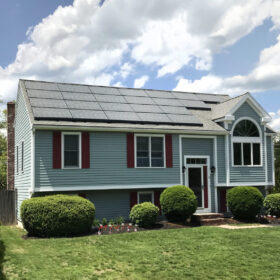
Solar and storage program forecast to save all Massachusetts ratepayers $313 million per year
Solar plus storage can also offer winter reliability improvements and limit gas consumption, finds a report from Synapse Energy Economics and the Solar Energy Industries Association.
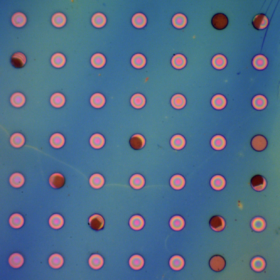
MIT researchers develop polymer film that could prevent solar panel corrosion
Engineers at the Massachusetts Institute of Technology say their polymer coating could be used to protect photovoltaic modules, due to its impermeability to gases. The team has demonstrated that a 60-nanometer-thick film can extend the lifetime of a perovskite crystal by several weeks.
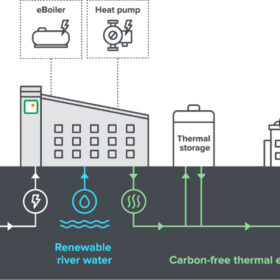
Work underway on ‘river’ heat pump complex in Massachusetts
The U.S’ largest district energy provider has started building a 35 MW heat pump complex in Massachusetts that will replace a natural gas boiler. The system will harness heat from the Charles River to produce carbon-free steam.
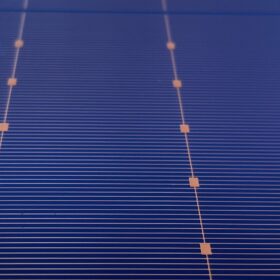
Key PV innovations often originated outside solar sector
Research from the Massachusetts Institute of Technology highlights 81 unique innovations across a diverse range of research efforts and industries that have impacted PV system costs since 1970, the majority of which originate from outside the sector.
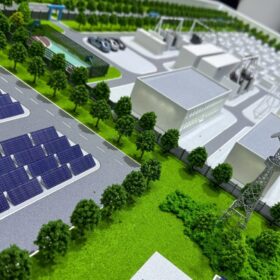
Massachusetts allows increased demand charges to drive energy storage
The Massachusetts Department of Public Utilities has approved a rate change that allows large electricity customers, specifically large business customers, to pay a transmission coincident peak demand charge instead of a volumetric transmission charge.

The impact of wildfires on PV power generation
Scientists have quantified the impact of wildfires on the availability of direct normal irradiance and global horizontal irradiance at the state, regional, and national levels in the United States. They have found that direct irradiance is more sensitive to smoke than the PV-relevant global horizontal irradiance.

Rooftop PV installations could raise daytime temperatures in urban environments by up to 1.5 C
New research from India shows that rooftop PV system may have “unintended” consequences on temperartures in urban environments. Rooftop arrays, for example, may potentially lower nighttime temperatures by up to 0.6 C.

The Hydrogen Stream: Equatic making anodes to produce H2 from seawater
Equatic says it has started annual production of 4,000 anodes for hydrogen generation from seawater in Singapore and Canada, while Nuvera Fuel Cells says it will demonstrate its first operational hydrogen-powered AC generator set and DC fast charger.
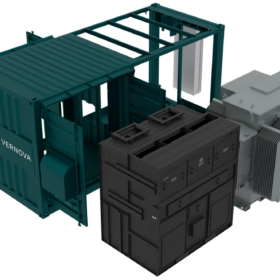
GE Vernova releases 2,000 V (DC) utility-scale inverter
GE Vernova has developed a 2,000 V (DC) utility-scale inverter, to be used in a North American pilot operation starting in early 2025. The inverter offers up to 6.0 MVA of output power.
