
Storing renewables with compressed air in urban heating pipeline
Researchers in China have developed a heating pipeline compressed-air energy storage (HP-CAES) concept that repurposes urban district heating networks as large-scale storage vessels for surplus renewable electricity. The system stores compressed air and recovered compression heat within existing pipelines, enabling both energy storage and heating functions with improved efficiency and lower infrastructure requirements compared to conventional tank-based CAES.
Solar module recycling based on oxidative liquefaction
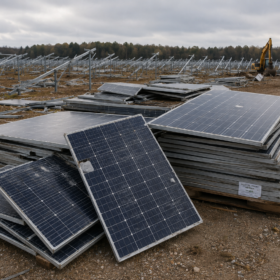
Researchers have developed a low-temperature, hydrogen peroxide-mediated oxidative liquefaction process to recycle end-of-life solar panels by selectively breaking down polymers into useful chemical feedstocks. The proposed method reduces energy consumption, eliminates hazardous solvents, and minimizes landfill waste compared to traditional recycling techniques.
Upcycling silicon from end-of-life solar modules via palladium nanoparticles
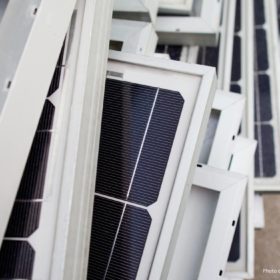
Researchers in Italy have developed a Pd/Si catalyst for upcycling silicon from end-of-life PV panels. The system showed performance comparable to commercial-silicon catalysts and stable recycling over six cycles.

Large-scale PV could intensify water stress in China’s Tarim Basin
Chinese researchers have found that massive photovoltaic deployment in the Taklamakan Desert could alter regional climate dynamics and worsen water stress in the already arid Tarim Basin, despite the area’s vast solar potential.
Study finds PV plants reshape land surface conditions, reducing wind speed and increasing soil moisture
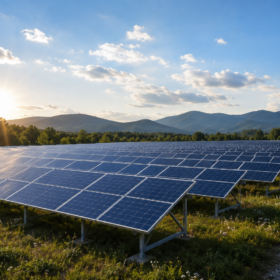
A China-based research team conducted a systematic review and meta-analysis of 147 studies on how solar PV systems alter land surface processes, covering 609 installations worldwide and 11 key climate variables. The results show mixed but mostly significant environmental effects, including reduced wind speed, albedo, and land surface or soil temperatures, alongside increased soil moisture, while air temperature changes remained largely non-significant.
Solar panels reduce thermal stress in dairy barns during critical afternoon hours
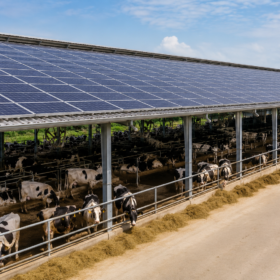
A study from China shows rooftop PV systems on dairy barns can significantly reduce roof heat flux and improve indoor thermal conditions. Field measurements and simulations found up to a 2.3 C reduction in indoor temperature during peak afternoon heat stress periods.

Solar-assisted air-source heat pump for radiant floor heating
Researchers in Canada designed an air-source heat pump integrated with an air-based solar collector and radiant floor heating for cold climates, showing that the proposed system configuratuon could improve the coefficient of performance from 2–4 to 2–6 and reduce significantly annual energy consumption.
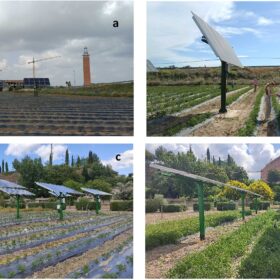
New irrigation tech helps reduce water use in agrivoltaics
Spanish researchers found that combining agrivoltaics with regulated deficit irrigation (RDI) can cut tomato irrigation water use by about 50%, while improving land-use efficiency through simultaneous crop and solar energy production.

Two-year testing shows how PV plants increase local temperatures in semi-arid regions
A two-year field study in a 100 MW photovoltaic plant in semi-arid Inner Mongolia combined ground-based sensors, radiation measurements, and UAV thermal imaging to quantify how large-scale PV installations alter local air temperature, surface temperature, and energy balance compared with nearby non-PV areas. Results show consistent site-scale warming of 0.8 C.
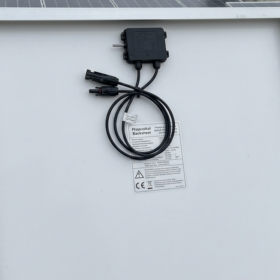
No evidence of PFAS leaching from solar panels, study finds
Researchers in the United States reviewed claims about PFAS in solar panels and found that while fluoropolymers may be used in limited components like backsheets or coatings, there is no confirmed evidence of PFAS leaching from commercially deployed modules. The study highlights widespread confusion between different PFAS types and emphasizes the need for clearer communication and transparency around fluoropolymer use in PV technologies.
