Seven countermeasures against negative electricity prices
Over the past months, Germany saw widespread negative electricity prices due to high solar PV output and low demand during midday hours. The bne industry association calls the situation avoidable and urges accelerated storage deployment, smarter EV charging, faster smart-meter rollout, and more flexible grid and market integration to better absorb renewable surpluses.

Spanish grid operator validates tower resistance against cascading failures
Redeia used advanced simulation to test anti-cascading transmission towers under extreme multi-tower collapse scenarios. The results confirm that current Spanish grid design standards effectively prevent cascading failures and support overall grid resilience.
Australia seeks 5 GW renewable generation in new tender
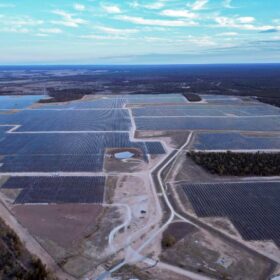
The Australian government has officially launched the latest tender in its Capacity Investment Scheme initiative, a competitive round targeting 5 GW of renewable energy generation capacity in the National Electricity Market.
An uncomfortable truth: What Spain’s blackout really showed
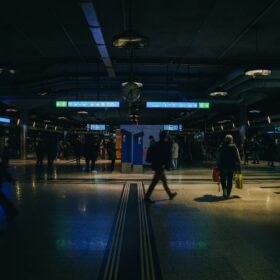
Spain and Portugal experienced a historic blackout caused not by cyberattacks or renewables alone, but by a fast-moving overvoltage event that exposed weaknesses in voltage control, grid coordination, and legacy operating practices in a renewable-heavy power system. Investigations concluded the outage was multifactorial, prompting Spain and Portugal to reform voltage-control rules, expand grid resilience measures, and accelerate deployment of batteries, grid-forming technologies, and renewable-based voltage support to stabilize future electricity networks.

San Marino launches solar acquisition program
San Marino’s public utility is inviting investors to sell solar assets or development-stage companies under a new program aimed at increasing domestic renewable generation and long-term energy security.
Pollution from coal plants can reduce solar generation by over 5%
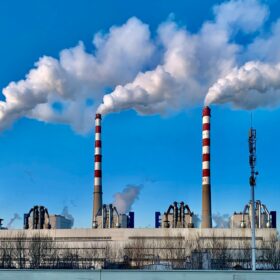
Research from the UK finds aerosols reduced global solar output by 5.8% in 2023, equivalent to 111 TWh. While China accounted for over half the global total in 2023, the country is the only major solar-producing region found to be demonstrating a decline in annual losses.
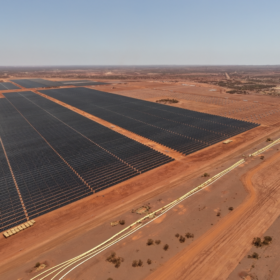
Fortescue begins building 690 MW solar farm, 650 MWh BESS in Australia
One of Australia’s biggest miners has commenced construction of a 690 MW solar farm and 650 MWh battery energy storage system in Western Australia as part of plans to eliminate diesel and gas from its iron ore operations.
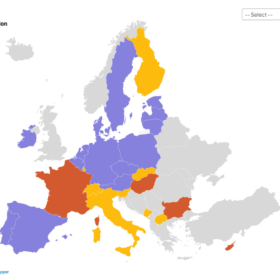
Europe creates map to locate available capacity in power grids
The new pan-European digital platform is designed to enhance transparency and improve access to information on the hosting capacity of European electricity grids, including both transmission and distribution networks.

The Hydrogen Stream: Netherlands commissions 32-km hydrogen pipeline
Gasunie has launched a 32-km hydrogen pipeline in the Port of Rotterdam linking Maasvlakte and Pernis, marking the first operational section of the Dutch hydrogen backbone and enabling future expansion toward national and cross-border hydrogen networks.
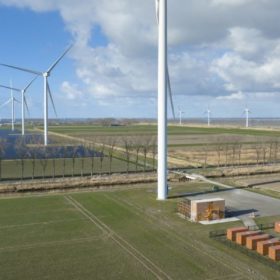
Solar and wind generated more electricity globally than gas power for the first time in April
At 531 TWh, electricity generated from wind and solar reached a new global record in April 2026, according to energy think tank Ember. Gas-fired power plants supplied 477 TWh.
