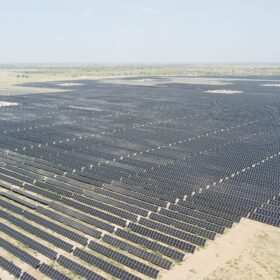
India hits 150 GW solar milestone
The country added around 44.6 GW of new PV capacity in fiscal year 2026, according to new figures released by JMK Research.

Japanese rail operator to procure 98 MW of new solar via corporate PPA
Tokyu Corp. and partners will supply Tokyu Railway with newly built solar power under a corporate power purchase agreement (PPA), covering about 30% of traction electricity demand.

Sweden connects 21,600 solar plants in 2025
Data from the Swedish Energy Agency finds there are now approximately 314,600 grid-connected solar plants in Sweden, the majority of which are systems smaller than 20 kW. The agency’s latest analysis also notes the rate of installations is slowing.

Ontario backs 12 solar projects totaling 915 MW
The Canadian province of Ontario has shared the results of what it has called its largest public power procurement exercise in its history, offering contracts to 12 solar projects and two wind projects with a cumulative capacity in excess of 1.3 GW.
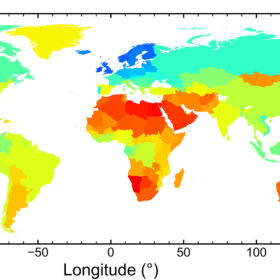
Solar PV Capex could fall to $192/kW by 2050
A review of 60 renewable energy studies finds that by 2050, solar PV and wind could supply 80–100% of electricity, but overly conservative Capex assumptions and simplified PV modeling often underestimate deployment potential. While future PV costs depend on supply chains and geopolitical risks, historical experience suggests medium-term risks are manageable, and material constraints are being resolved.

Dust, storms drag southern European solar as central regions outperform in March
In a new weekly update for pv magazine, Solcast, a DNV company, reports that Saharan dust caused widespread panel soiling in southern Europe in early May, while much of central and eastern Europe benefitted from above-average solar resources. Favourable conditions broke down later in the month as cold polar air and a powerful storm system brought cloud, snow and damaging winds to many parts of the continent.
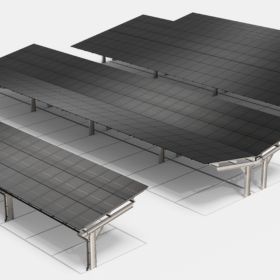
Solarport launches modular PV carport series
Solarport has launched the modular PowerPark PRO PV carport series, designed to meet UK/EU parking standards and adapt to various site layouts with multiple configurations and orientations.

How Switzerland plans to integrate 40 GW of solar by 2050
Swiss national grid company Swissgrid teamed up with a group of Swiss energy expects to publish a white paper covering how Switzerland can integrate up to 40 GW of solar by 2050 while maintaining safe and reliable operation of the grid.
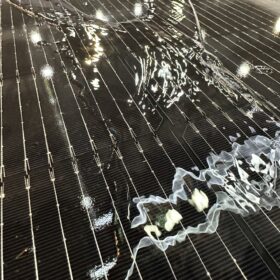
Internet-of-Things could bring solar module water cooling closer to commercial viability
A Czech team developed an IoT system using MQTT to autonomously cool PV panels, boosting daily energy yield by 7.38% with a positive net energy balance.

How to delaminate end-of-life solar modules with ultrasonic cavitation
A research team has developed a solvent-free method using ultrasonic cavitation to delaminate end-of-life crystalline-silicon PV modules, fully separating the glass and front EVA layer while partially releasing c-Si fragments. The proposed approach achieved an 82.2% mass-based delamination efficiency, highlighting ultrasonic cavitation as a sustainable alternative for PV module recycling.
