Sandra Enkhardt

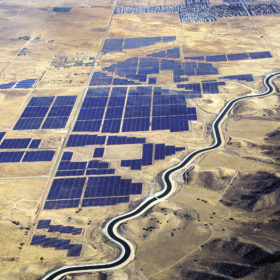
JinkoSolar says US authorities see no violation of Hanwha Q-Cells patent
The patentability of Korean company Hanwha’s technology is being examined by a U.S. commission, according to Jinko. The Chinese manufacturer said it expects a final decision by December. Hanwha responded by announcing its decision to appeal.

Software for virtual power plants powered by residential solar-plus-storage
With its sonnenVPP, German battery company Sonnen wants to improve the efficiency of virtual power plants which it says can offer primary balancing energy from houses with solar and storage and can operate up to 90% more cost-effectively.
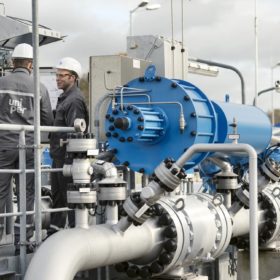
Bringing green hydrogen to market
German companies Uniper and Siemens will cooperate on joint projects to advance the use of green hydrogen and sector coupling. Conventional, gas-fired hydrogen production plants will be gradually transformed as part of the initiative.
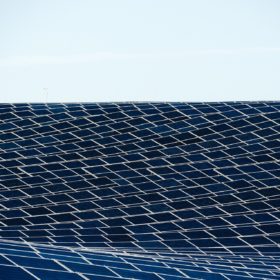
WoodMac expects 106 GW of newly deployed solar this year
As Chinese PV manufacturers are now on the way to fully utilizing their production capacities, it is becoming increasingly clear how much coronavirus containment measures will affect global demand. Wood Mackenzie expects a decline in residential PV demand and a shift in investment to commercial projects, which is why it now only expects 106 GW of capacity additions this year.
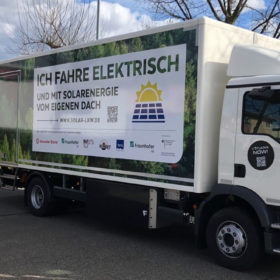
Fraunhofer ISE tests vehicle-integrated PV in commercial trucks
Two Fraunhofer institutes and four industrial players are working together to develop a concept that will facilitate the use of vehicle-integrated solar modules in electric vehicles and trucks. The three-year “Lade PV” project will also focus on PV components and manufacturing processes.
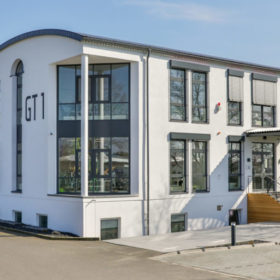
Tesvolt starts commercial storage system production at gigafactory despite Covid-19
The German manufacturer has started to produce its first commercial storage systems at its new plant under strict safety precautions due to the ongoing Covid-19 pandemic. The facility’s current annual capacity is set at 255 MWh, but the company aims to eventually expand that to 1 GWh.
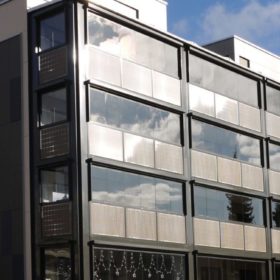
Golden PV panels for balcony solar systems
German manufacturer a2-solar has supplied 240 solar panels for the renovation of an old building in Bern, Switzerland. The modules, which are being integrated into 96 balconies, feature different transparency options and color variations.
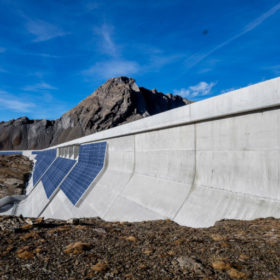
Vertical PV project on dam in Alps gets approval
Swiss developer Axpo is now modifying the design of the 2 MW plant and is expected to make a final decision on construction later this year. It is currently in negotiations with potential electricity consumers.
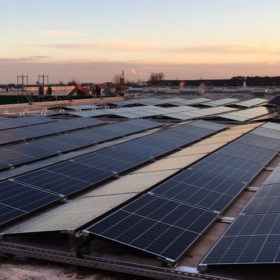
Germany installed 700 MW of PV in first two months of 2020
The country added around 700 MW of new solar in the January-February period. Cumulative capacity hit 49.75 GW, which means that about 2.25 GW remains before the feed-in tariff cap is reached.
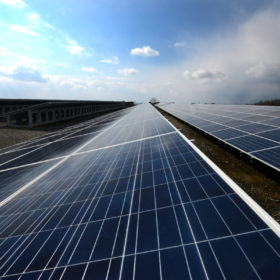
German utility-scale PV tender concludes with average price of €0.0518/kWh
The government allocated 301 MW of PV capacity across 51 projects in the procurement exercise.
