
Japan’s PV module shipments hit 1.28 GW as residential demand accelerates
Japan’s solar module shipments reached 1.28 GW in the first quarter of fiscal 2025, supported by strong residential demand and ongoing dominance by foreign manufacturers, with domestic production limited to just 5% of total output, according to the Japan Photovoltaic Energy Association (JPEA).

South Korea mandates solar systems at public parking lots from late November
The South Korean government says all public parking lots larger than 1,000 square meters will be required to install solar power systems from the end of this month, as part of a nationwide policy to accelerate renewable energy adoption in urban areas.
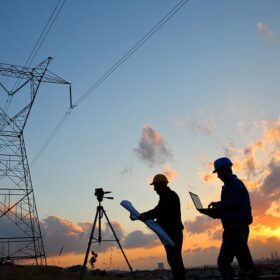
Australia’s clean energy pipeline grows 24% to 56.6 GW
The Australian Energy Market Operator (AEMO) reported a 24% rise in new generation and storage capacity across the National Electricity Market (NEM), reaching 56.6 GW, as grid-scale batteries and hybrid solar projects drive growth.

Masdar, EWEC break ground on 1 GW baseload solar-plus-storage project
Abu Dhabi Future Energy Co. (Masdar) and Emirates Water and Electricity Co. (EWEC) have started building a solar-plus-storage project in Abu Dhabi that will deliver 1 GW of continuous baseload energy from a 5.2 GW solar plant paired with a 19 GWh battery system.
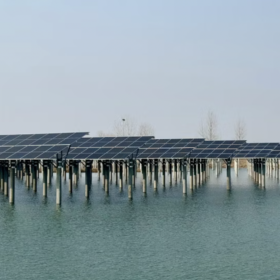
Taiwan to revise environmental impact rules amid floating solar scrutiny
The Taiwanese government has revealed plans to update environmental impact assessment (EIA) standards for solar projects, following storm-related damage to installations and growing public concern over floating PV deployment.
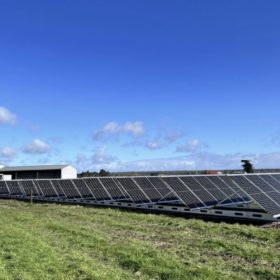
Australian-made solar microgrid system enters US market
Australian manufacturer PHNXX has broken into the United States market, teaming with microgrid system and software manufacturer Paired Power to launch a portable solar-powered stand-alone power system that can be installed and generating electricity within a single day.

Engie India eyes 7 GW of hybrid and storage-backed renewables by 2030
Hybrid integration, digital optimization, and rising corporate demand are defining India’s next renewable phase, says Engie India’s Shantanu Upasani.

Dutch energy suppliers update electricity origin reporting after review
The Dutch energy regulator has confirmed that all energy suppliers now provide verified electricity origin data, improving transparency for households and businesses.

Panasonic supplies hydrogen fuel cell and solar system to Osaka Metro
Panasonic has provided transit operator Osaka Metro with a combined hydrogen fuel cell and solar power system, underscoring the Japanese conglomerate’s growing focus on industrial hydrogen applications.

Japan’s Aomori prefecture sets capacity tax on large wind, solar
Japan’s Aomori prefecture is introducing a capacity-based levy on large onshore wind and solar projects, using zoning criteria to align renewable expansion with environmental, historical, and cultural priorities.
