
Kalyon PV begins production at new TOPCon solar cell factory in Turkey
Kalyon PV has launched a new 1 GW solar cell factory in Ankara, raising its total cell production capacity to 2.1 GW
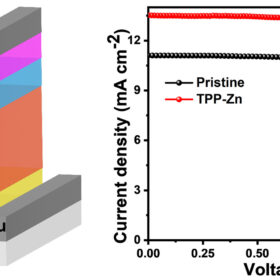
Inorganic perovskite solar cell based on tetraphenyl-porphine zinc interlayer achieves 82% fill factor
An international research team has proposed a perovskite solar cell architecture incorporating a thin tetraphenyl-porphine zinc interfacial layer to enhance surface potential, passivate defect states, and improve charge transport. The strategy leads to improved device efficiency and operational stability, enabling power conversion efficiencies exceeding 13%.

Key takeaways from SolarEx Istanbul
The 18th SolarEx Istanbul showcased Türkiye’s expanding solar ecosystem, bringing together hundreds of exhibitors and reinforcing its role as a rising global hub for PV manufacturing and innovation. At the same time, strong growth in distributed solar and emerging battery storage highlights both the market’s potential and its key challenges, including regulatory constraints, grid limits, and increasing global competition.

Turkish manufacturer presents photovoltaic water heater
Adana-based WHS introduced a PV-powered water heating system that operates without an inverter, using 1.6 kW of direct DC solar input with integrated MPPT. The system supports hybrid operation with a 2 kW AC backup, runs at extra-low voltage of less than 50 V, delivers around 3 kWh/day of thermal energy, and heats water to 65–85 C for residential and small commercial use.

How to delaminate end-of-life solar modules with ultrasonic cavitation
A research team has developed a solvent-free method using ultrasonic cavitation to delaminate end-of-life crystalline-silicon PV modules, fully separating the glass and front EVA layer while partially releasing c-Si fragments. The proposed approach achieved an 82.2% mass-based delamination efficiency, highlighting ultrasonic cavitation as a sustainable alternative for PV module recycling.
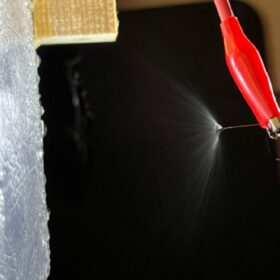
Electrospray cooling can boost PV panel performance with minimal water use
Researchers in Turkey optimized electrospray cooling for PV panels, achieving optimal power output with minimal water use and a compact, energy-efficient setup. Their study identified irradiance, flow rate, voltage, and nozzle distance as ideal parameters.

Türkiye’s solar capacity surpasses 25 GW
Alparslan Bayraktar, Türkiye’s Minister of Energy and Natural Resources, says 2026 will be a record year for renewables in the country after total deployed solar reached 25,827 MW by the end of January.
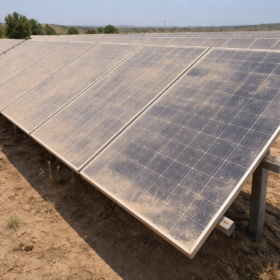
Oleic acid anti‑soiling coating for solar modules
Researchers in Türkiye have developed a passive anti-soiling coating for PV panels using oleic acid–modified aluminum oxide nanoparticles applied via spray coating. Laboratory and field tests showed the coating reduced dust accumulation and initially boosted daily energy output, though performance declined under prolonged environmental stressors.

ACWA Power to build 2 GW of solar in Türkiye
Saudi Arabian energy giant ACWA Power will build two 1 GW solar power plants in Türkiye as part of a wider investment agreement covering 5 GW of new renewables capacity in the country.
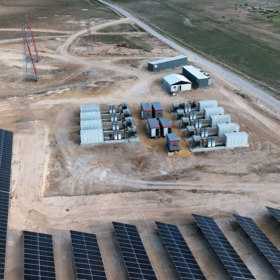
Turkey switches on first major solar-plus-storage project
Oze Grup’s Sivrihisar project pairs a 49.2 MW solar plant with 34.1 MWh of battery storage, marking Turkey’s first grid-connected hybrid facility approved under the sustainable finance framework (DGES).
