
San Marino launches solar acquisition program
San Marino’s public utility is inviting investors to sell solar assets or development-stage companies under a new program aimed at increasing domestic renewable generation and long-term energy security.
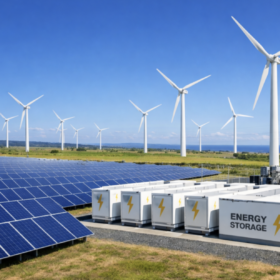
Finergreen exits Africa, focuses growth on Europe and Asia
French advisory firm Finergreen has sold its African operations to local management teams and will refocus its strategy on Europe and Asia, where it says its main growth opportunities lie.
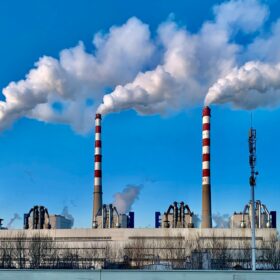
Pollution from coal plants can reduce solar generation by over 5%
Research from the UK finds aerosols reduced global solar output by 5.8% in 2023, equivalent to 111 TWh. While China accounted for over half the global total in 2023, the country is the only major solar-producing region found to be demonstrating a decline in annual losses.
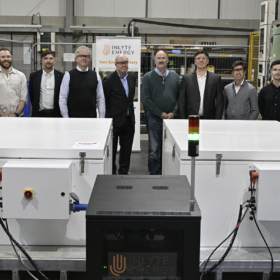
Inlyte Energy targets US data centers with iron-sodium batteries
California-based Inlyte Energy plans pilot projects in Switzerland and the United States this year to demonstrate its iron-sodium battery technology for data centers and utility-scale energy storage applications.
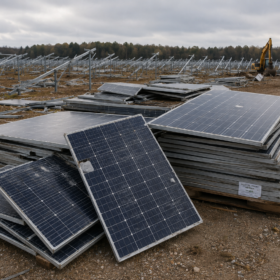
Solar module recycling based on oxidative liquefaction
Researchers have developed a low-temperature, hydrogen peroxide-mediated oxidative liquefaction process to recycle end-of-life solar panels by selectively breaking down polymers into useful chemical feedstocks. The proposed method reduces energy consumption, eliminates hazardous solvents, and minimizes landfill waste compared to traditional recycling techniques.
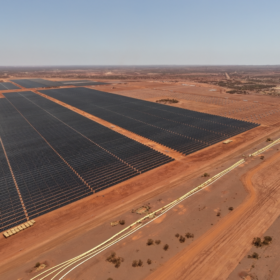
Fortescue begins building 690 MW solar farm, 650 MWh BESS in Australia
One of Australia’s biggest miners has commenced construction of a 690 MW solar farm and 650 MWh battery energy storage system in Western Australia as part of plans to eliminate diesel and gas from its iron ore operations.
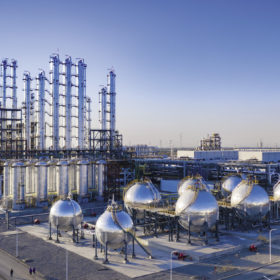
Oil in turmoil, solar stays stable
Soaring energy costs have grabbed headlines around the world the past two months, but prices across the solar supply chain are marching to their own beat, writes Hanwei Wu of OPIS. Oversupply in Asia continues to distort markets, with either sharp price falls or tepid price gains.

Brazil falls short of its battery storage potential
The Brazilian Association of Energy Storage Solutions gathered executives to debate applications that could solve systemic challenges facing the Brazilian electricity sector. The issue, they argue, goes beyond a “BESS vs. thermal or renewables vs. energy security” debate, but involves finding the best combination of security, price, ‘renewability’, and flexibility.
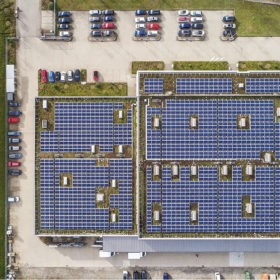
EU understimating rooftop PV power generation
SolarPower Europe estimates that EU solar generation is significantly underreported, with actual PV output projected at 410 TWh in 2025 versus 275 TWh in official statistics. The group attributes the gap to incomplete rooftop PV registration, data transfer delays, and the difficulty of measuring self-consumed solar electricity.
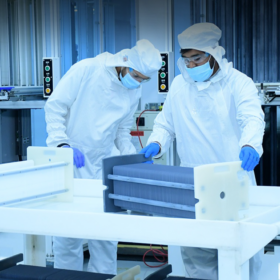
Fujiyama Power to set up 1.2 GW TOPCon solar cell manufacturing facility in India
Fujiyama Power Systems, which currently operates a 1 GW mono PERC solar cell manufacturing facility in Uttar Pradesh, plans to set up an additional 1.2 GW TOPCon solar cell manufacturing facility in Madhya Pradesh as part of its strategy to expand its presence in the on-grid rooftop solar segment.
