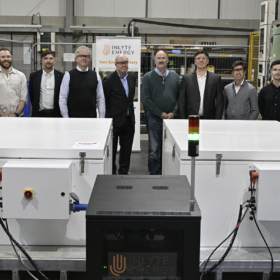
Inlyte Energy targets US data centers with iron-sodium batteries
California-based Inlyte Energy plans pilot projects in Switzerland and the United States this year to demonstrate its iron-sodium battery technology for data centers and utility-scale energy storage applications.
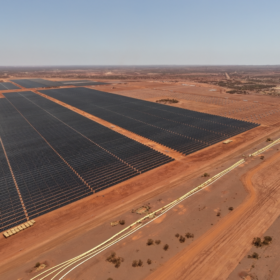
Fortescue begins building 690 MW solar farm, 650 MWh BESS in Australia
One of Australia’s biggest miners has commenced construction of a 690 MW solar farm and 650 MWh battery energy storage system in Western Australia as part of plans to eliminate diesel and gas from its iron ore operations.

Brazil falls short of its battery storage potential
The Brazilian Association of Energy Storage Solutions gathered executives to debate applications that could solve systemic challenges facing the Brazilian electricity sector. The issue, they argue, goes beyond a “BESS vs. thermal or renewables vs. energy security” debate, but involves finding the best combination of security, price, ‘renewability’, and flexibility.
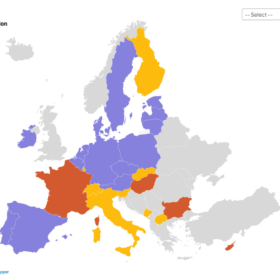
Europe creates map to locate available capacity in power grids
The new pan-European digital platform is designed to enhance transparency and improve access to information on the hosting capacity of European electricity grids, including both transmission and distribution networks.
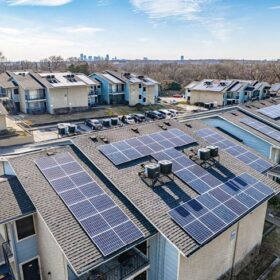
Mandatory utility fees distort price signals for rooftop solar in the US
Regulators in 27 U.S. states are shifting residential electricity pricing toward higher fixed monthly charges and lower usage-based rates, weakening the economics of rooftop solar and home battery systems. This redesign reduces incentives for distributed energy, compresses savings from peak-rate arbitrage, and reinforces reliance on costly centralized grid expansion, potentially raising long-term electricity costs for consumers.
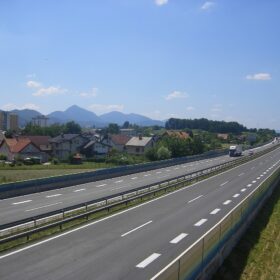
EBRD lends €70 million to Slovenian BESS developer across four countries
The European Bank for Reconstruction and Development (EBRD) is backing a five-country merchant battery storage push by Slovenian developer NGEN Energetske Rešitve with a €70 million ($81.3 million) loan supported by an EU first-loss guarantee, in one of the first multi-country merchant BESS portfolios in central Europe.
The Hydrogen Stream: Netherlands commissions 32-km hydrogen pipeline
Gasunie has launched a 32-km hydrogen pipeline in the Port of Rotterdam linking Maasvlakte and Pernis, marking the first operational section of the Dutch hydrogen backbone and enabling future expansion toward national and cross-border hydrogen networks.
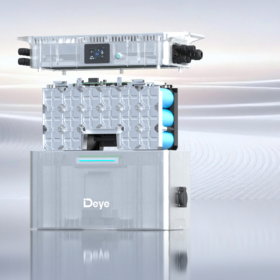
Deye unveils 2.56 kWh hybrid battery for balcony, residential PV
The Chinese manufacturer said the system is designed for easy AC-coupled integration with existing PV systems and scalable expansion up to 7.5 kW three-phase output. The system purportedly delivers 800 W–2.5 kW AC output, supports up to 5.76 kW PV input with 96.5% efficiency.
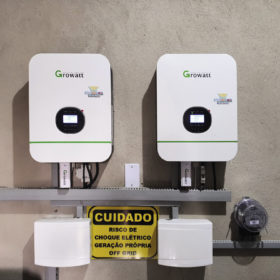
Brazil increases import tax on batteries at local manufacturer’s request
The measure raises the import tariff from 18% to 25% for 48V LFP batteries intended for stationary applications in telecommunications and photovoltaic systems of up to 4.8 kW until May 2027, following a request from the domestic industry via LETEC. For other batteries classified as lithium-ion electric accumulators, the reduced rate of 18% remains.
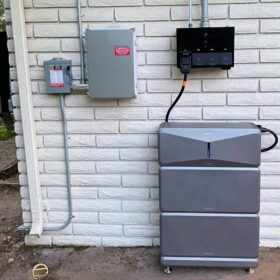
Anker Solix E10 deep dive review: The alternative to the whole-home generator
An engineer and home-energy enthusiast installs the Anker Solix E10 on a fire-prone California hillside, and documents the entire process in a deep dive review for ESS News
